
AI for Ecommerce: 10 Ways Stores Are Using AI to Increase Sales

Online stores live and die by their visuals. Customers decide within seconds whether a product looks worth buying, and low-quality images consistently cost sales. Yet traditional photo shoots are expensive, slow, and out of reach for many growing brands.
AI is changing what is possible for ecommerce sellers, making it faster and more affordable to produce sharp, professional visuals at scale. Caspa puts that capability directly in the hands of store owners, no studio or large budget required. For brands ready to compete on image quality without the overhead, Caspa offers a smarter approach to product photography.
Table of Contents
The Biggest Mistakes Brands Make When Using AI for Ecommerce
Why Product Images Remain One of the Highest-Impact AI Opportunities
How Caspa Helps Ecommerce Brands Create High-Converting Product Visuals at Scale
Summary
AI has moved from experimental technology to essential infrastructure for ecommerce businesses, with 84% of ecommerce companies now citing it as their top priority for improving customer experience. This shift is driven by compounding operational pressures, including rising customer acquisition costs, faster product launch cycles, and growing content demands that manual workflows can no longer absorb at scale.
Product images remain one of the highest-impact variables in online purchasing decisions, with 90% of online shoppers rating photo quality as either extremely important or very important when deciding whether to buy. Despite this, many brands deprioritize lifestyle shots, detail close-ups, and contextual scenes because traditional studio production is too slow and expensive to sustain across large catalogs, leaving product pages that look complete but convert below their potential.
AI-powered personalization delivers measurable revenue returns, with retailers using it reporting a 10 to 15% revenue uplift and marketing spend generating 5 to 8 times ROI in some cases. These results reflect buying intent already present in customer behavior data, waiting to be matched to the right product at the right moment, rather than manufactured through discounting or ad spend.
One of the most consistent failure patterns across ecommerce AI adoption is measuring success by volume of content produced rather than by commercial outcomes. Only 15% of ecommerce brands have a clear AI strategy before implementation, leading to generic outputs, an inconsistent brand voice across channels, and efficiency gains that never translate into conversion improvements or revenue lift.
Integration complexity remains the leading barrier to AI tool adoption, cited by 35% of ecommerce businesses, which means the most sophisticated tool is rarely the most valuable one. Teams that fail to adopt AI tools consistently lose the investment regardless of the technology's capability, making ease of fit within existing workflows a more important evaluation criterion than feature depth.
AI can reduce operational costs by up to 30%, according to analysis from the Syracuse University iSchool, and supply chain forecasting errors by up to 50%, according to Vena Solutions, but the commercial returns depend entirely on whether efficiency gains are applied to bottlenecks that directly affect customer experience and purchasing confidence. Product photography addresses this by replacing the studio production cycle with on-demand image generation, allowing brands to close the gap between catalog size and visual content quality without a proportional increase in production costs.
Why AI Has Become Essential for Ecommerce Growth
AI is no longer optional infrastructure for ecommerce businesses. It has become the operating layer that separates brands moving fast from brands falling behind. The gap widens every quarter.
🎯 Key Point: The question is no longer whether to adopt AI—it's how quickly you can implement it before competitors pull ahead.

"84% of ecommerce businesses say AI is their top priority for improving customer experience." — Triple Whale
According to Triple Whale, 84% of ecommerce businesses say AI is their top priority for improving customer experience. When the overwhelming majority of an industry points at the same priority, that priority has become the baseline — not the differentiator.
🔑 Takeaway: At 84% adoption intent, AI is no longer a competitive advantage — it's the entry fee. Brands that delay are no longer playing catch-up; they're playing a different game entirely.
What is driving the urgency to adopt AI in ecommerce?
What is driving this urgency is not enthusiasm for technology, but pressure from every direction: rising customer acquisition costs, multiplying content demands, compressing product launch cycles, and shopper expectations for effortless personalization. Manual workflows that worked at a smaller scale now create bottlenecks that cost real revenue. AI removes friction between intention and execution, letting smaller teams accomplish what previously required entire departments.
The content bottleneck is concrete. Most ecommerce brands handle product photography traditionally: book a studio, hire a photographer, wait days or weeks for edits, repeat for every new product. Brands using product photography powered by AI generate thousands of consistent, studio-quality images in a fraction of the time and cost, enabling new products to reach customers faster.
How does AI-powered personalization deliver measurable ROI?
Bloomreach reports that AI-powered personalization can deliver 5 to 8 times ROI on marketing spend. AI makes personalization scalable by processing behavioral signals, purchase history, and browsing patterns across thousands of customers simultaneously and acting on them instantly. No human team can match that speed without it.
The brands seeing the sharpest results are not using AI to replace judgment. They are using it to eliminate repetitive, time-consuming work that slows judgment down, freeing teams to focus on strategy, creative direction, and customer relationships. That shift makes AI essential.
Related Reading
10 Practical Ways Ecommerce Businesses Are Using AI Today
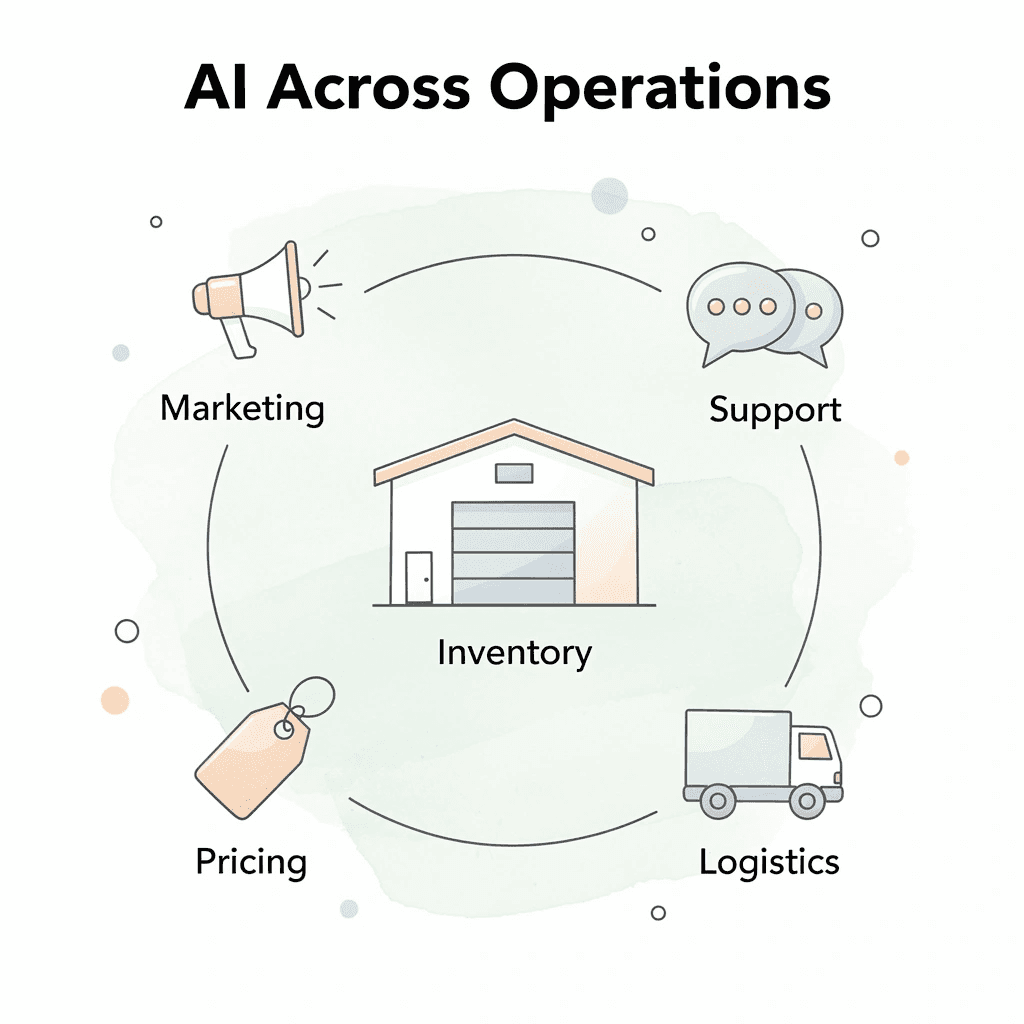
Ecommerce businesses are already running AI across their entire operation as daily infrastructure — not as an experiment, but as a core competitive advantage. The ten applications below represent where the sharpest brands are seeing real, measurable returns.
"The brands winning in ecommerce aren't waiting to adopt AI — they're using it as daily infrastructure across their entire operation."
🎯 Key Point: These aren't theoretical use cases — these are proven, active applications that leading ecommerce brands are deploying right now to drive measurable growth.
AI Application Area | Primary Benefit |
|---|---|
Personalization & Recommendations | Higher conversion rates |
Customer Service Automation | 24/7 support at scale |
Inventory & Demand Forecasting | Reduced overstock & waste |
Dynamic Pricing | Maximized revenue per sale |
Visual Search & Discovery | Improved product findability |
Fraud Detection | Lower chargeback rates |
Email & Marketing Automation | Higher engagement & ROI |
Product Description Generation | Faster catalog scaling |
Returns Optimization | Reduced operational costs |
Search & Merchandising | Better on-site conversion |
💡 Tip: Focus on the applications most aligned with your current bottlenecks — even one well-implemented AI tool can deliver a significant, measurable lift to your bottom line.
1. Product Image Creation
The traditional studio approach—booking photographers, renting space, coordinating models, waiting weeks for edits—works for small catalogs with generous timelines. It breaks down when you need to launch across five marketplaces simultaneously, test twelve creative variations for a single ad set, and maintain visual consistency across channels. Cost per image rises, timelines extend, and teams spend more time managing logistics than optimizing what converts.
How does AI-generated product photography change the production timeline?
AI-generated product photography significantly compresses this timeline. Platforms like Caspa create ultra-realistic product photos, lifestyle scenes, and infographic content in minutes. Our platform reduces production costs by up to 10 times while increasing conversion rates, fundamentally transforming how visual content is produced.
2. Product Descriptions at Scale
Writing product copy for five hundred SKUs is a volume problem, not a creative challenge. AI transforms raw product specifications into customer-ready descriptions structured for readability and search visibility. Teams can publish catalog updates in hours rather than days, with a consistent tone and keyword coverage across every listing.
3. Personalized Recommendations
Customers leave without buying because the products they would have loved never appear in front of them. According to Triple Whale, retailers using AI for personalization see a 10-15% revenue uplift. AI recommendation engines analyze purchase history, browsing behavior, and session data to show the right product at the right time throughout the shopping journey.
4. Customer Support Without the Bottleneck
As order volume grows from 1,000 to 10,000 monthly, support requests increase. AI-powered chatbots handle common interactions like order status, return policies, and shipping estimates. This frees human agents to focus on conversations requiring human judgment, reducing response times, improving satisfaction, and helping support teams keep pace.
5. Advertising Creative and Testing
The failure point in most advertising workflows is the speed of iteration. AI compresses manual ad creation from days to hours, generating copy variations, headline options, and creative concepts for parallel testing. This accelerates learning cycles and improves campaign performance by identifying what works before the budget depletes.
6. Email Marketing That Feels Personal
When a customer has bought something twice and viewed a specific category three times, a regular newsletter falls short. AI-powered email tools analyze behavioral signals to send targeted messages, such as abandoned-cart sequences, product recommendations based on past purchases, or reactivation campaigns for inactive customers. The process is automated, yet the experience feels thoughtful.
7. Inventory Forecasting
Having too much inventory ties up money in warehouses, while insufficient inventory sends customers to competitors. AI forecasting tools analyze past sales data, seasonal patterns, and external demand signals to predict required inventory levels. Vena Solutions reports that AI can reduce supply chain forecasting errors by up to 50%, resulting in fewer emergency orders, less unsold inventory, and improved cash flow.
8. Pricing Optimization
AI-driven pricing differs from static pricing in its responsiveness. While static pricing sets a single fixed price, AI tools continuously monitor competitor activity, inventory levels, and demand signals, and then adjust prices to protect profit margins without losing customers. For price-sensitive products, this pricing agility is essential to compete.
9. Search and Discovery
A customer who cannot find the product they want leaves without browsing other items. AI-powered search understands what the customer is trying to find rather than matching keywords alone. It handles misspellings, natural-language queries, and unclear terms that traditional search cannot handle. This reduces fruitless searches, increases cart fills, and creates a seamless shopping experience.
10. Conversion Rate Optimization
Pattern recognition is where AI earns its place in CRO. AI tools analyze user behavior, identify friction points, and find specific opportunities for improvement: headline tests, layout changes, or recommendation widgets placed at the right moment in the purchase flow. Decisions become data-driven rather than opinion-based, and improvements compound over time.
But knowing where AI works is only half the picture.
The Biggest Mistakes Brands Make When Using AI for Ecommerce
Knowing where AI breaks down is as valuable as knowing where it works well. Failure patterns are consistent across ecommerce businesses of every size, from scrappy startups to enterprise-level brands.
"Knowing your AI's failure points is not a weakness — it's the strategic edge that separates brands that scale from brands that stall." — Industry Insight
⚠️ Warning: If you're measuring only where AI succeeds, you're missing half the picture and leaving significant revenue on the table.
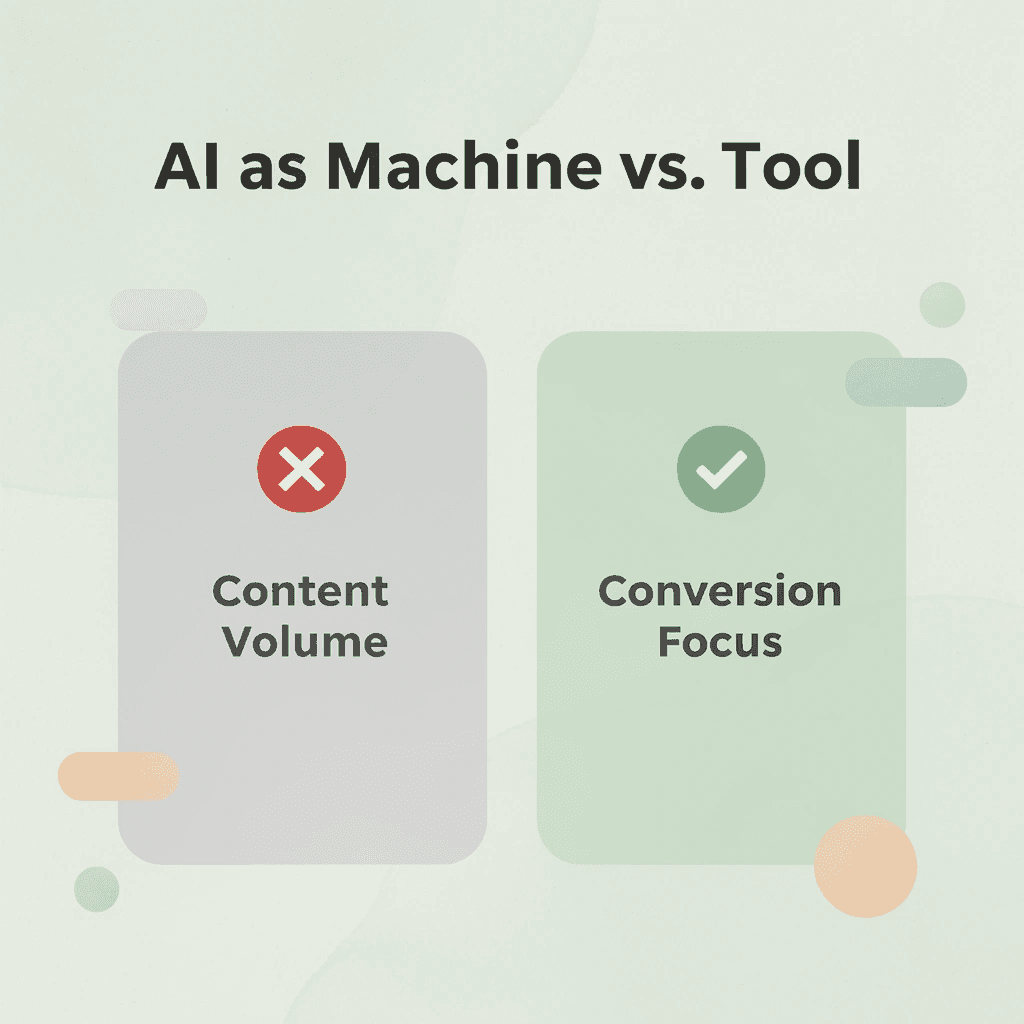
The most common mistake is treating AI as a content machine rather than a conversion tool. Brands create hundreds of product descriptions, ad variations, and social posts, measuring success by how much they produce rather than how well they perform. But content that is technically correct but emotionally flat doesn't move customers closer to buying. The result: investing in AI tools with no meaningful increase in revenue.
Mistake | What Brands Do | The Real Cost |
|---|---|---|
Volume over value | Produce hundreds of AI-generated assets | Flat conversion rates despite high output |
No emotional targeting | Prioritize correctness over connection | Customers don't buy |
Misaligned metrics | Measure content quantity | Revenue stays stagnant |
💡 Tip: Shift your AI success metric from how much content you produce to how much revenue that content drives — that's the only number that matters.
🎯 Key Point: AI-generated content must be optimized for emotional resonance and conversion intent, not just technical accuracy — or your investment will deliver output without outcomes.
When output replaces strategy
According to Triple Whale, only 15% of ecommerce brands have a clear AI strategy before implementation. Most brands use AI reactively, chasing efficiency gains without defining what "better" means for their customers. Generic prompts produce generic outputs because AI tools trained on similar data tend to return similar results unless guided by specific brand context, audience insights, and conversion intent. The solution is a clearer brief.
How does inconsistent AI output erode brand recognition?
Inconsistency worsens the problem faster than most brands expect. When AI-generated content shifts in tone across product pages, email campaigns, and paid ads, customers notice the fragmentation. Brand recognition depends on repetition and coherence, and AI without firm guardrails quietly erodes both. Establishing brand voice parameters before scaling AI output determines whether content compounds or clutters.
Why do visual content decisions carry the highest stakes?
Visual content matters significantly. Many brands assume AI-generated images surpass traditional studio work and publish product pictures without verifying color accuracy, background consistency, or realistic representation. A product image that misrepresents texture, scale, or finish drives returns and erodes trust. Platforms like Caspa generate ultra-realistic visuals with consistent styling at scale, enabling brands to maintain speed without sacrificing credibility.
Where does over-automation in customer interactions break down?
When companies over-automate customer interactions, they risk losing trust. AI handles routine questions efficiently, but customers with complex order issues or high-value purchases need human support, not scripted responses. Brands that route all interactions through automated systems save time initially but sacrifice long-term trust. The optimal approach pairs automation for speed with accessible human support for complex issues.
Are brands measuring AI success by the wrong metrics?
The single most overlooked mistake is how brands measure AI success. Time saved is useful, but conversion rate, average order value, and customer lifetime value are business outcomes. An ecommerce brand can cut content production time by 80% and see no revenue improvement if the content doesn't help customers make confident decisions. That gap between efficiency and performance is where most AI investments stall.
Why Product Images Remain One of the Highest-Impact AI Opportunities
Product images drive purchasing decisions before shoppers read a single word. Visual judgment happens in milliseconds and either builds confidence or kills it.
"Visual judgment happens in milliseconds — product images either build purchasing confidence or destroy it before a single word is read."
🎯 Key Point: Your product gallery is not a design element; it is your first and most powerful sales tool.

The gap between efficiency and performance is most evident here. Brands invest heavily in AI-generated copy, then wonder why conversion rates stay flat. The answer is usually in the product gallery: images that are technically present but commercially inert.
Image Problem | Business Impact |
|---|---|
Blurry hero shot | Immediate loss of trust |
Single angle only | Unresolved buyer doubt |
White background, no lifestyle context | Zero emotional connection |
A blurry hero shot, a single angle, a white-background photo with no lifestyle context — these are not aesthetic problems. They are revenue problems.
⚠️ Warning: Investing in AI-generated copy while neglecting your product gallery is one of the most common — and most costly — mistakes brands make.
💡 Tip: Treat every image in your product gallery as a conversion asset, not a placeholder — each angle, each context shot, each detail view is doing active selling work.
What shoppers actually use to make decisions
When customers cannot touch or test a product, images do the sensory work for them. Research from Etsy's Seller Handbook found that 90% of online shoppers rated photo quality as extremely or very important when making a purchase decision. Uncertainty undermines conversion, and images are the fastest tool to reduce it.
Why does traditional product photography fall short?
Traditional product photography is expensive and slow. A single shoot requires photographers, studio rentals, models, stylists, lighting equipment, and post-production editing. For brands launching 20, 50, or 100 SKUs at once, costs escalate rapidly. Most brands prioritize hero images and forgo lifestyle shots, detail close-ups, and contextual scenes that answer shopper questions, resulting in product pages that appear complete but underperform.
How does AI-powered product photography change the equation?
AI-powered product photography changes this equation. Platforms like Caspa generate ultra-realistic product images, lifestyle scenes, and A+ content from a single source image without scheduling shoots or hiring teams. Brands that previously needed weeks and thousands of dollars can now build full image libraries in hours. According to the Syracuse University iSchool's analysis of AI adoption, AI can reduce operational costs by up to 30%, a reduction that directly impacts the costs that made visual content production feel out of reach for smaller brands.
Why scale changes everything
Seasonal campaigns, marketplace requirements, new product variations, and promotional assets create continuous demand for fresh visuals throughout the year. A brand that solves its photography problem for one product launch has only solved it temporarily. The real challenge is building a visual content operation that scales without a proportional increase in budget. AI-generated imagery makes this structural shift possible, which is why this application consistently outperforms other AI investments in direct commercial impact.
Choosing the right AI tool for this job is more nuanced than most brands expect.
How to Evaluate AI Tools for Ecommerce
Choosing the right AI tool is about finding the right fit for a specific problem you need to solve, not picking the most advanced option. Businesses that get the most from their AI investments ask better questions before they commit, rather than chasing the newest features.
"The best AI tool isn't the most advanced one — it's the one that solves your specific problem better than anything else." — AI Ecommerce Evaluation Framework
🎯 Key Point: Always start your AI tool evaluation by defining the exact problem you need to solve — not by browsing feature lists.
⚠️ Warning: Chasing the newest features without a clear use case is one of the most common — and costly — mistakes ecommerce businesses make when adopting AI.
Evaluation Approach | Outcome |
|---|---|
Define the problem first | Find tools with a targeted, high-impact fit |
Chase advanced features | Risk wasted spend and low adoption |
Ask better questions upfront | Maximize ROI on AI investments |

Does it solve a real bottleneck or just add complexity?
A tool that saves three minutes per task across a five-person team is not a meaningful investment. A tool that eliminates two days of production work per product launch is. The difference lies in whether the problem was clearly defined before the purchase decision.
Why do so many AI tools stall before they stick?
According to Triple Whale's AI in Ecommerce Statistics, 35% of ecommerce businesses cite integration complexity as the top barrier to adopting AI tools. Teams fail not because AI tools lack capability, but because they don't fit cleanly into existing workflows, causing adoption to stall and usage to drop. The most valuable AI solution is one your team will use every day.
How does replacing studio production remove a real constraint?
Most teams handle visual content production by booking studio time, coordinating with photographers, and waiting on edits—a cycle that becomes problematic when scaling. Platforms like Caspa replace this with on-demand AI-generated product photography, allowing brands to produce consistent, conversion-ready visuals across large catalogs without production bottlenecks. Brands using Caspa report up to 40% more conversions and production cost reductions of up to 10x.
What does it actually cost to scale?
Scalability is what most teams underestimate when evaluating tools. A tool that works well for a small catalog can become difficult to manage as the product count grows, campaigns multiply, and marketplace requirements shift. The right question is not "does this work now?" but "does this still work when our catalogue is three times larger?" If the answer requires hiring more staff or paying significantly more per unit of output, the tool is not solving the scaling problem—it's deferring it.
How does brand consistency hold up as volume increases?
Brand consistency can deteriorate as you grow. AI-generated content must sound, look, and represent your brand identically across all customer touchpoints. A tool producing uncontrollable or unadjustable content will erode the consistency that makes your brand recognizable. Before adopting a platform, verify how much customization it allows.
What five questions should you run every tool through?
The right framework for comparing tools comes down to five questions: Does it produce professional-quality outputs? Does it meaningfully speed up your team's work? Does the value justify the cost? Can it grow with your catalog without requiring proportionally more effort? Can your team adopt it without rebuilding their entire workflow? Run any tool through those filters and the answer becomes clear.
Once you know what to look for in an AI tool, the next question is: what does it look like when those criteria translate into real sales?
Related Reading
Ai For Product Photos
Ai Generated Product Images
Ai Product Photo Generator
Amazon Vs Shopify
Ai Product Video Generator
Ai Clothing Model
Printful Review
Shopify Vs Amazon
Ai Model For Clothing
Ai Product Video
Ai Fashion Model
Printful Pricing
Best Amazon Seller Tools
How Caspa Helps Ecommerce Brands Create High-Converting Product Visuals at Scale
Product visuals are one of the most resource-intensive parts of launching and marketing products. High-quality images are essential for getting attention, building trust, and driving conversions — but creating them the traditional way requires significant investments in photography, editing, production, and coordination. Caspa helps ecommerce brands overcome these bottlenecks by making it easier to create professional product visuals quickly and at scale.
"High-quality product visuals are no longer a luxury — they are the single most critical factor in converting browsers into buyers at scale." — Ecommerce Industry Insight
🎯 Key Point: Traditional product photography is slow, expensive, and difficult to scale — Caspa eliminates those barriers so brands can move faster and spend smarter.
💡 Tip: Brands that invest in scalable visual production workflows consistently see higher conversion rates and lower cost-per-asset compared to those relying on conventional photography pipelines.
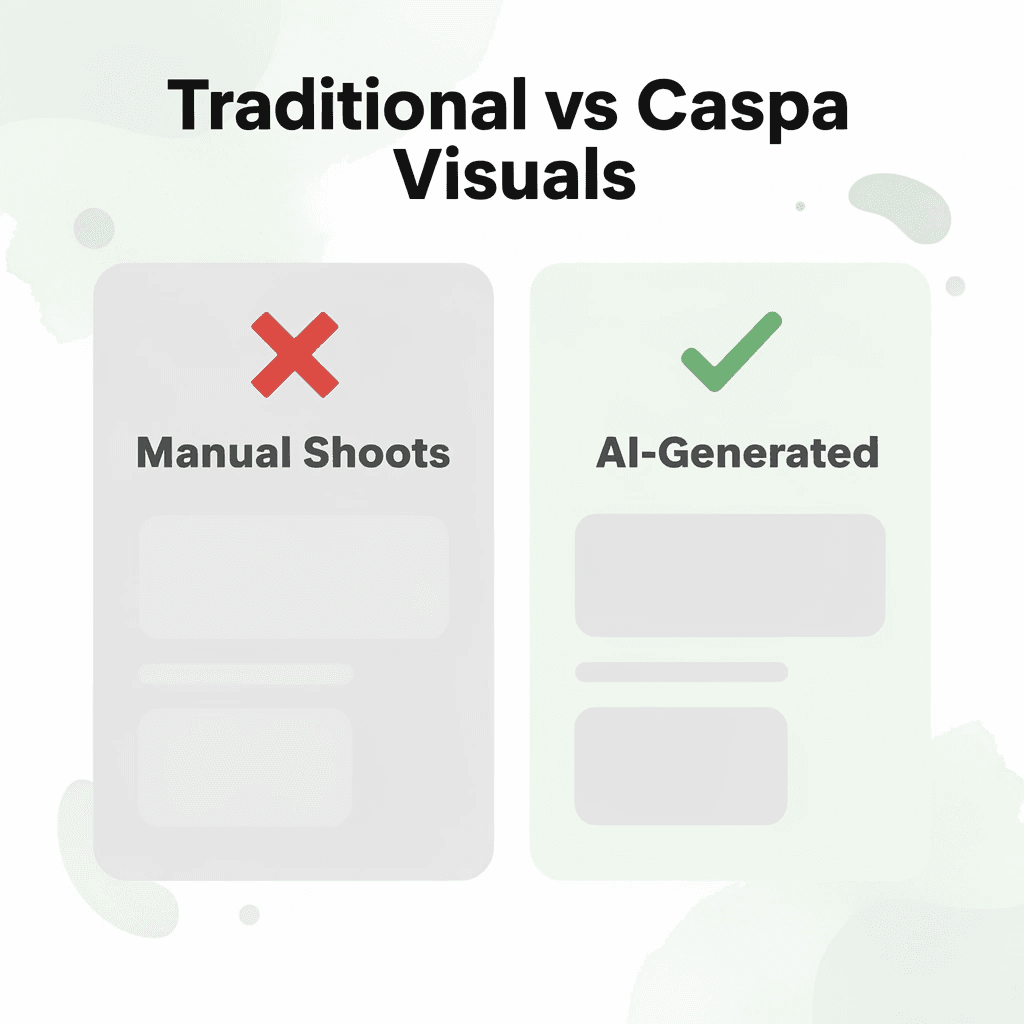
Traditional Approach | With Caspa |
|---|---|
High photography costs | Reduced production spend |
Slow turnaround times | Fast, scalable output |
Heavy coordination required | Streamlined workflow |
Limited visual variations | Professional visuals at scale |
How does Caspa replace traditional product photography workflows?
Traditional product photography requires coordinating photographers, studios, equipment, and editing teams before products are ready for sale. Caspa's AI product photography capabilities generate professional-quality images without the complexity and expense of traditional production, significantly accelerating the path from inventory arrival to product listing.
Lifestyle imagery helps customers visualize how a product fits into their daily lives, but traditional production requires locations, props, creative direction, and extensive planning. Caspa's AI-powered lifestyle image generation allows brands to create compelling scenes that showcase products in realistic contexts, driving stronger engagement and purchase intent.
How does Caspa handle model photography and catalog consistency?
Many online shopping categories benefit from showing products on people. Model photography helps shoppers see how products look and work in real life, but traditional photo shoots are expensive and time-consuming. Our Caspa platform generates human model images without requiring traditional photography sessions, enabling faster creation of diverse visual assets at lower production costs.
Maintaining a consistent look across large product catalogs is difficult when products are photographed differently. Our Caspa background replacement features help brands create cleaner, more consistent looks across marketplaces, websites, and marketing campaigns, improving both brand presentation and the shopping experience.
How does Caspa improve existing assets and streamline marketplace readiness?
Many businesses have older product images, supplier-provided assets, or lower-resolution files that don't meet modern ecommerce standards. Caspa improves existing visuals through image enhancement and upscaling, allowing brands to increase quality without reshooting products, which is particularly valuable for businesses managing large catalogs.
Major ecommerce platforms require multiple image formats and visual assets. A single product may need white-background images, lifestyle content, close-up details, promotional graphics, and marketplace-specific variations. Caspa streamlines this process by generating marketplace-ready visuals faster, enabling brands to launch products more efficiently.
How does Caspa help ecommerce brands scale visual content production?
Traditional production methods don't scale easily: expensive photoshoots increase costs, limited lifestyle content reduces marketing opportunities, model photography adds complexity, inconsistent imagery weakens brand presentation, slow content production delays launches, and low-quality source images limit conversion potential. Caspa addresses these challenges by helping brands create professional visuals quickly, consistently, and at scale.
Consider an Amazon seller preparing to launch a new product line with dozens of SKUs. Using traditional methods, they might spend weeks coordinating photographers, arranging shoots, editing images, and preparing marketplace assets. With Caspa, they can generate product photos, lifestyle imagery, and model visuals within hours, dramatically reducing production timelines and accelerating launch.
The ecommerce brands gaining the greatest advantage from AI are those using it to eliminate bottlenecks that slow growth. For many ecommerce businesses, visual content remains one of the largest barriers to scaling product launches and marketing efforts. Caspa helps sellers and brands create professional product imagery at scale, enabling faster product launches, reduced production costs, and improved conversion potential across ecommerce channels.
Get Product Photos that Increase Your Sales Today
The criteria from the previous section show where your production process quietly costs you money. When catalog growth moves faster than your ability to create consistent, high-quality visuals, the gap appears directly in conversion rates. This is a compounding drag on revenue that grows every time you add a new SKU without supporting visuals.
"When catalog growth outpaces your ability to produce consistent, high-quality visuals, the gap shows up directly in conversion rates." — Production Gap Principle
🎯 Key Point: Your visual production bottleneck is a revenue leak hiding in plain sight.

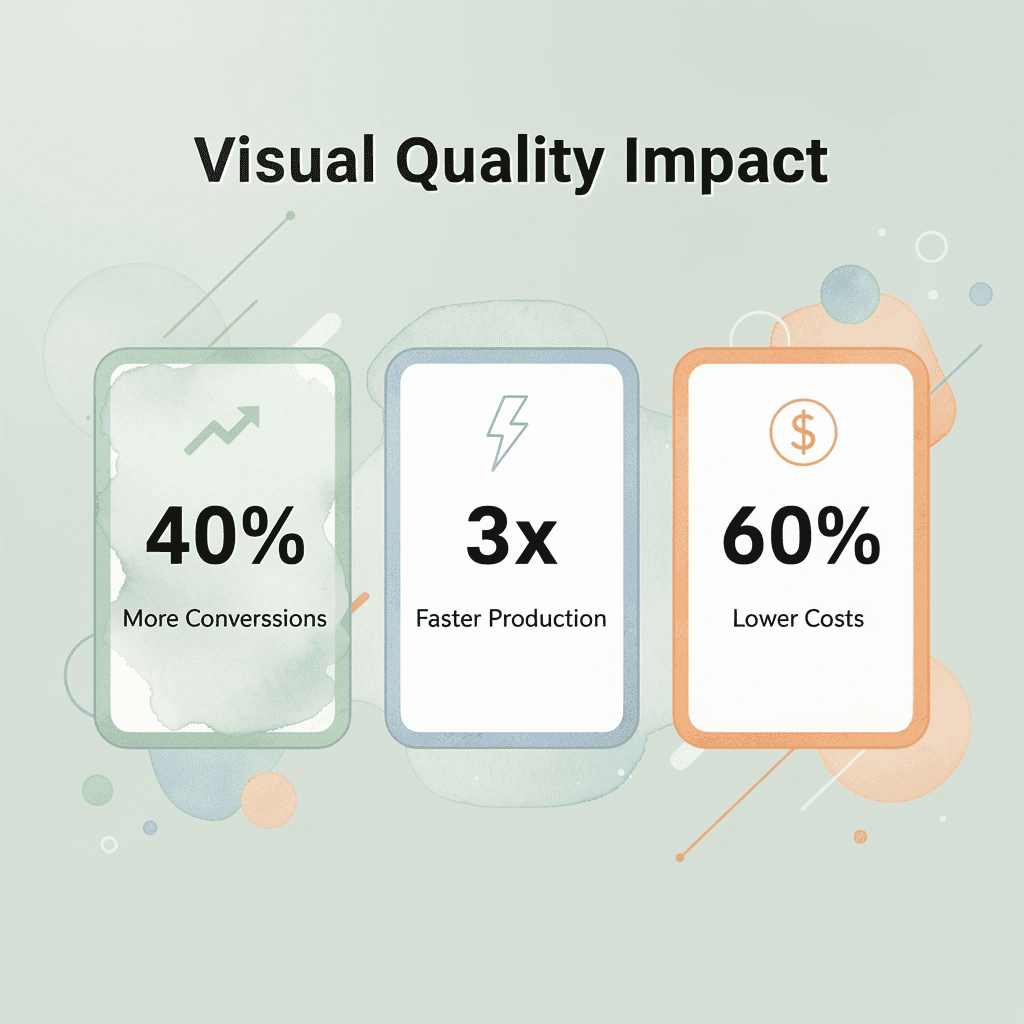
Product photography platforms like Caspa let ecommerce brands generate studio-quality images, lifestyle scenes, and A+ content without traditional production timelines. Brands report up to 40% more conversions and production costs reduced by as much as 10x.
Metric | Traditional Production | Caspa Platform |
|---|---|---|
Production Timeline | Days to weeks | Fraction of the time |
Cost Efficiency | Baseline | Up to 10x cheaper |
Conversion Impact | Baseline | Up to 40% more conversions |
Content Types | Limited by budget | Studio, lifestyle & A+ content |
💡 Tip: If your brand is scaling its catalog, AI-powered photography platforms like Caspa remove the single biggest constraint between your products and higher-converting listings.
Better visuals, produced faster, at a fraction of the cost: this is a commercial opportunity, not a creative one. Brands that close the gap between catalog size and visual quality convert better, scale faster, and protect their bottom line.
⚠️ Warning: Treating product photography as a purely creative expense obscures its real role as a direct revenue driver with measurable ROI.
🔑 Takeaway: The combination of up to 40% conversion lift and 10x cost reduction makes AI-powered visual production one of the highest-leverage investments an ecommerce brand can make today.
Related Reading
Best Background For Product Photography
Ai Clothing Mockup Generator
Teespring Vs Printful
Placeit Alternative
Amazon Ai Tools
T-shirt Mockup Ai
Placeit Pricing
Redbubble Vs Printful
Ecommerce Product Video
Best Ai For Clothing Brands
Ai Product Photo Editor
Printify Vs Gelato
Ai Fashion Model Generator
Luxury Product Photography
Flat Lay Product Photography
Advertising Product Photography
Amazon Merch On Demand
Merch On Demand
Ai Product Video Maker
Teespring Alternatives
Ai Clothing Model Generator
Printful Vs Gelato